Encryption Protocols Fortifying Financial Transfers Across Global Interactive Gaming Platforms
Encryption standards form the backbone of secure financial operations in interactive gaming portals that operate across multiple continents, and these protocols evolve continuously to match emerging threats while meeting regulatory demands from various jurisdictions. Data transmission between players and platforms relies on layered cryptographic methods that convert sensitive details such as payment credentials and account balances into unreadable formats during transit and storage.
Core Standards Driving Transaction Protection
Transport Layer Security version 1.3 serves as the primary protocol for establishing encrypted connections in most licensed gaming environments, and it replaced earlier iterations by eliminating outdated cipher suites while reducing handshake latency for faster session starts. Researchers at institutions like the National Institute of Standards and Technology have documented how AES-256 encryption integrates with TLS to protect data payloads, and this combination appears in systems handling deposits from credit cards, e-wallets, and bank transfers worldwide.
Public key infrastructure adds another dimension through RSA or elliptic curve algorithms that authenticate servers and enable secure key exchange, and observers note that gaming operators must renew digital certificates regularly to maintain compliance. In October 2026 several platforms updated their implementations following guidance from regional bodies to incorporate post-quantum cryptography elements still in testing phases.
Regional Regulatory Influences on Implementation
European frameworks require adherence to data protection rules that intersect with encryption requirements, and operators in those markets often reference standards from the European Union Agency for Cybersecurity when configuring systems. Australian platforms follow directives from the Australian Communications and Media Authority that emphasize end-to-end encryption for financial flows, whereas Canadian provincial regulators incorporate similar mandates through their respective gaming commissions.
Asian markets present additional variations, and Singapore's Infocomm Media Development Authority has issued guidelines that align with international cryptographic benchmarks yet add local audit procedures. These differences create a patchwork where a single gaming portal might deploy distinct configurations for users based on geographic location.
Application in Real-Time Payment Processing
During a deposit sequence the player's device initiates a TLS handshake that negotiates cipher suites before any account information travels across networks, and this process occurs in milliseconds yet establishes mutual authentication between parties. Withdrawal requests undergo comparable scrutiny because platforms must verify identities and encrypt confirmation tokens to prevent interception.
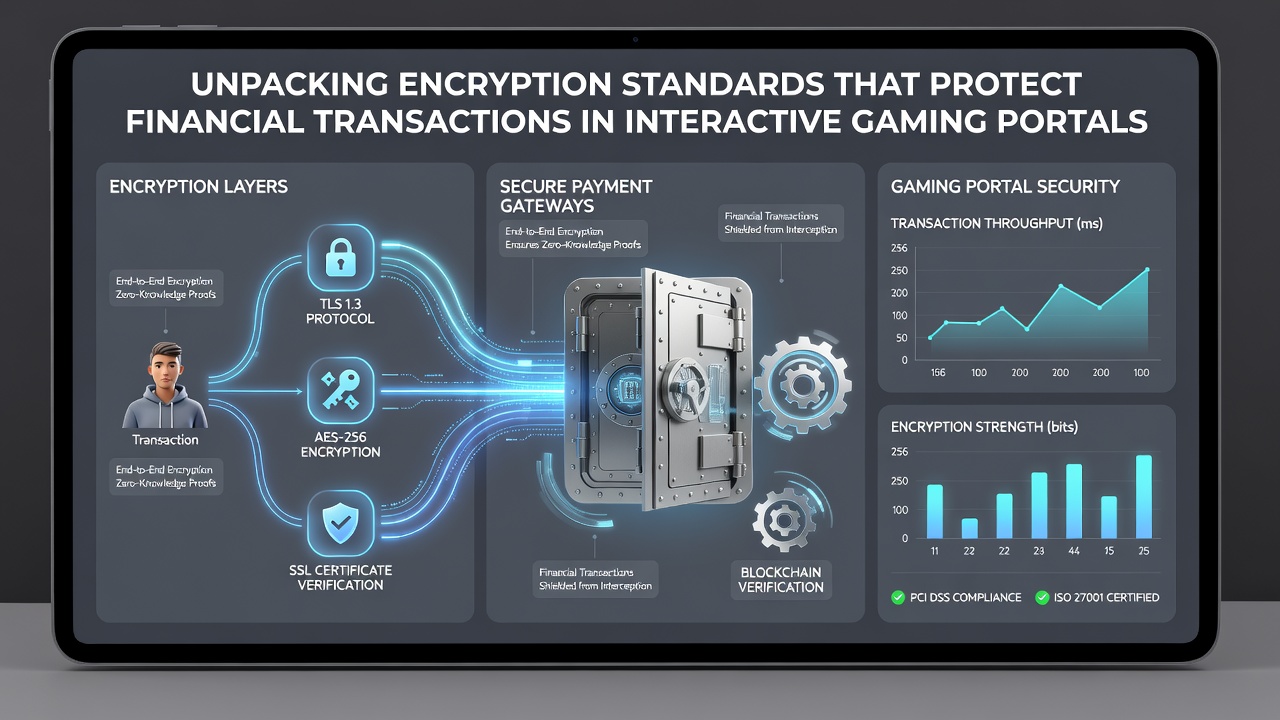
Payment service providers integrate with gaming backends through APIs protected by the same standards, and studies from organizations such as the PCI Security Standards Council indicate that tokenization further reduces exposure by replacing card numbers with unique identifiers that hold no intrinsic value if breached. Those who manage high-volume systems report that monitoring tools track cipher usage and flag any fallback to weaker options during routine operations.
Emerging Challenges and Adaptation Patterns
Quantum computing developments prompt ongoing research into algorithms resistant to such advances, and several academic papers from 2025 detail hybrid approaches that combine classical and post-quantum methods for gradual rollout. Gaming portals must balance security upgrades against performance impacts because excessive computational overhead can affect live gameplay responsiveness.
Industry reports reveal that regular penetration testing and third-party audits verify encryption effectiveness, and findings from these exercises often lead to targeted patches rather than full overhauls. Operators in multiple regions coordinate through trade associations to share threat intelligence that informs collective defense strategies.
Conclusion
Encryption standards continue to underpin trust in financial transactions within interactive gaming portals by adapting to technological shifts and regulatory expectations across borders. Consistent application of protocols like TLS 1.3 combined with AES-256 and supporting measures ensures data remains protected throughout its lifecycle, and ongoing refinements keep pace with the global landscape.