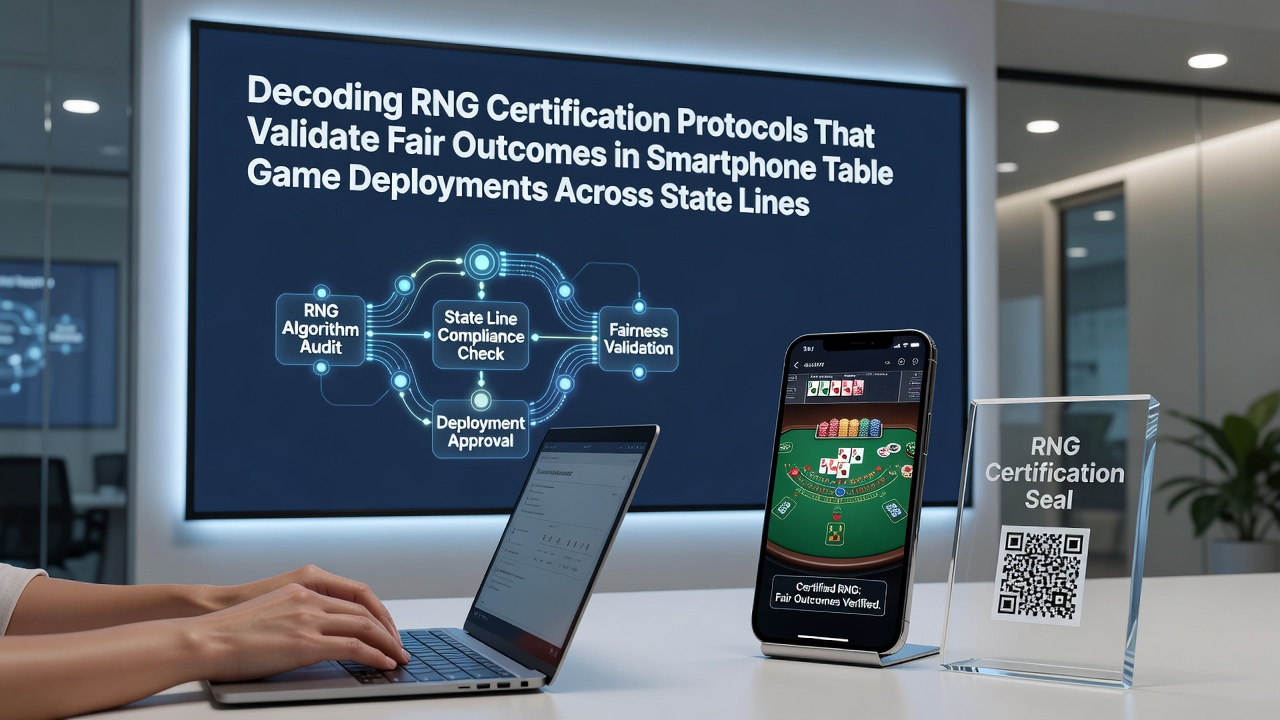
Decoding RNG Certification Protocols That Validate Fair Outcomes in Smartphone Table Game Deployments Across State Lines
Random number generator systems form the core mechanism that determines card distributions and wheel outcomes in virtual table games deployed on smartphones, and regulators across multiple jurisdictions require independent laboratories to evaluate these systems before any commercial release. Certification protocols typically involve statistical testing suites that examine millions of generated sequences for uniformity, independence, and absence of predictable patterns, while state-specific rules dictate how often operators must submit updated reports when games cross borders. Data from regulatory filings shows that laboratories such as Gaming Laboratories International conduct these evaluations using standardized methodologies that include diehard tests, poker hand distribution checks, and long-run frequency analysis before issuing compliance letters accepted in multiple states.
Core Testing Methodologies Applied to Mobile Table Game RNGs
Testing begins with source code review followed by hardware and software entropy source validation, and laboratories then run continuous simulation cycles that replicate live deployment conditions on iOS and Android platforms. Researchers at institutions tracking gaming technology have documented that certification requires RNG output to pass at least 90 percent of statistical batteries with p-values falling within acceptable ranges, and any deviation triggers re-testing or algorithm redesign. Operators deploying games across state lines must obtain separate approvals from each jurisdiction even when a single laboratory report serves as the foundation, because individual gaming commissions impose additional criteria such as minimum entropy thresholds or periodic re-certification schedules that differ by region.
Interstate Variations in Certification Requirements
Nevada and New Jersey maintain distinct submission portals and documentation standards despite both accepting reports from the same accredited labs, while emerging markets in states like Michigan and Pennsylvania add requirements for real-time monitoring interfaces that transmit RNG performance data to regulators. Observers note that these differences create layered compliance workflows where a game certified for one state may need supplemental testing or modified seed generation logic before launch elsewhere. Figures from industry reports indicate that cross-border deployments in 2025 involved an average of three separate certification cycles per title, and this pattern continues as additional states authorize mobile table game offerings.
Validation Steps During Live Smartphone Deployments
Once initial certification is granted, operators implement continuous monitoring systems that log sequence outputs and compare them against expected statistical distributions, with automated alerts generated when anomalies exceed predefined thresholds. Gaming control boards in several jurisdictions now require quarterly summary reports that aggregate performance metrics from all active mobile sessions, and these reports must reference the original laboratory certification numbers. In October 2026 several commissions began piloting shared audit platforms that allow real-time data exchange between states, reducing redundant testing while preserving each regulator's authority to request additional verification. External audits conducted by third-party firms supplement these internal checks, and data from those audits shows that discrepancies are typically resolved through seed rotation or algorithm patches rather than full re-certification.
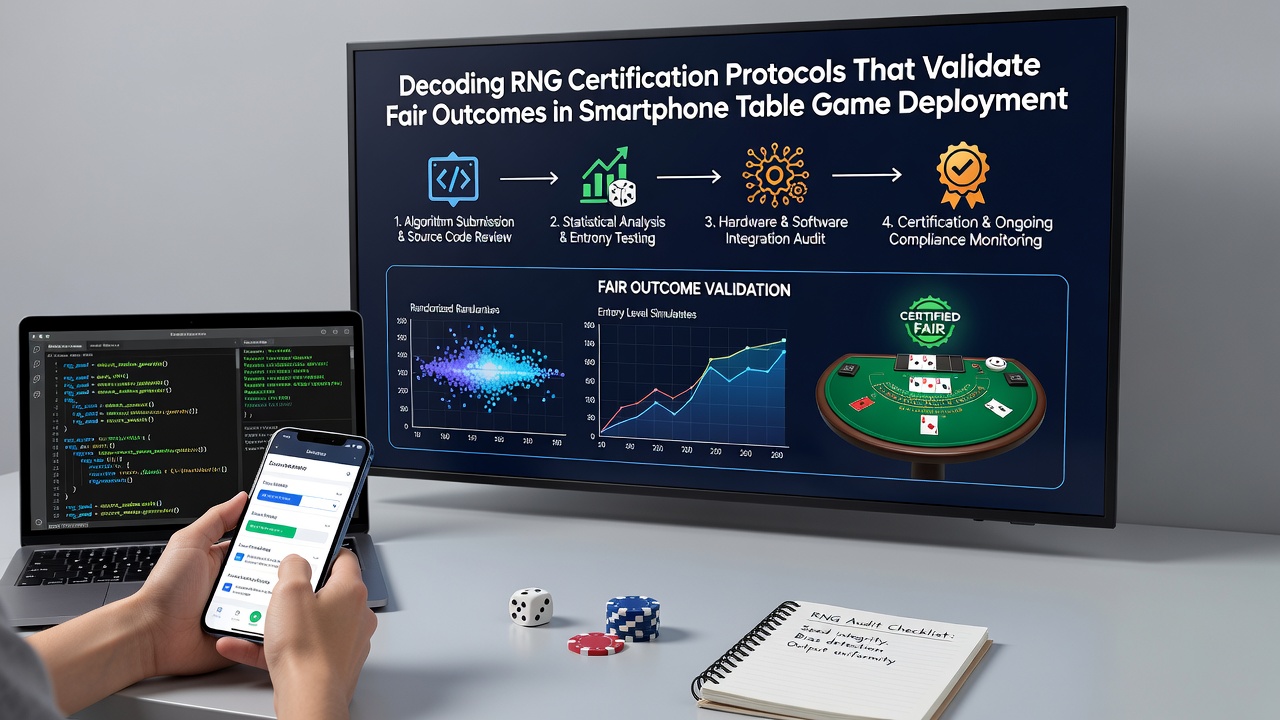
Table game variants such as virtual blackjack and roulette present unique challenges because card and wheel simulations must avoid short-term clustering that players might perceive as bias, even when long-run statistics remain within certified parameters. Laboratories therefore apply specialized tests for sequential dependence and run-length distribution in addition to standard randomness batteries, and state regulators review these results before authorizing deployment. One study released by a university research group examined output from over 200 certified mobile titles and confirmed that certified RNGs maintained expected distribution properties across multi-state rollouts when operators followed prescribed update protocols.
Regulatory Coordination and Emerging Standards in 2026
Coordination efforts among state regulators have produced model templates for RNG documentation that reduce administrative duplication, yet each commission retains final approval authority and may impose jurisdiction-specific parameters such as minimum sample sizes for re-testing after software updates. Industry associations have published guidance documents that outline best practices for maintaining certification validity when games are updated for new device models or operating system versions. Data compiled by regulatory bodies shows that the majority of certification delays in recent years stem from incomplete documentation rather than actual RNG failures, prompting laboratories to offer pre-submission consultation services that clarify state-specific formatting expectations.
Conclusion
Certification protocols for RNG systems in smartphone table games continue to evolve as more states authorize mobile wagering and as testing methodologies incorporate advances in statistical analysis. Operators must navigate a patchwork of requirements that demands careful coordination between laboratories and multiple regulatory agencies, while ongoing monitoring ensures that certified performance characteristics persist throughout the operational lifecycle of each game title. Recent initiatives in October 2026 aimed at data sharing represent one step toward greater efficiency without compromising the independent verification standards that underpin player confidence across state lines.